
What geothermal really costs in Dallas–Fort Worth
Most contractors make you sit through a sales pitch to hear a number. Here are ours up front: $25,000 to $65,000 installed, depending on tonnage, loop type, and drilling depth. Below, we show exactly where every dollar goes.
What DFW homeowners actually pay
Complete systems — drilling, loops, heat pump, duct connections, and commissioning. One price, no surprise line items.
$25K–$35K
1,500–2,500 sq ft · 2–3 ton system · 2–3 vertical bores. Common in established neighborhoods like Richardson, Plano, and east Dallas.
$35K–$50K
2,500–4,000 sq ft · 3–5 ton system · 3–5 vertical bores. Our bread-and-butter install across Frisco, McKinney, Prosper, and Celina.
$50K–$65K+
4,000+ sq ft · 5+ tons · multiple zones, custom duct, often spray foam. Typical in Southlake, Highland Park, and Collin County custom builds.
What's inside that price
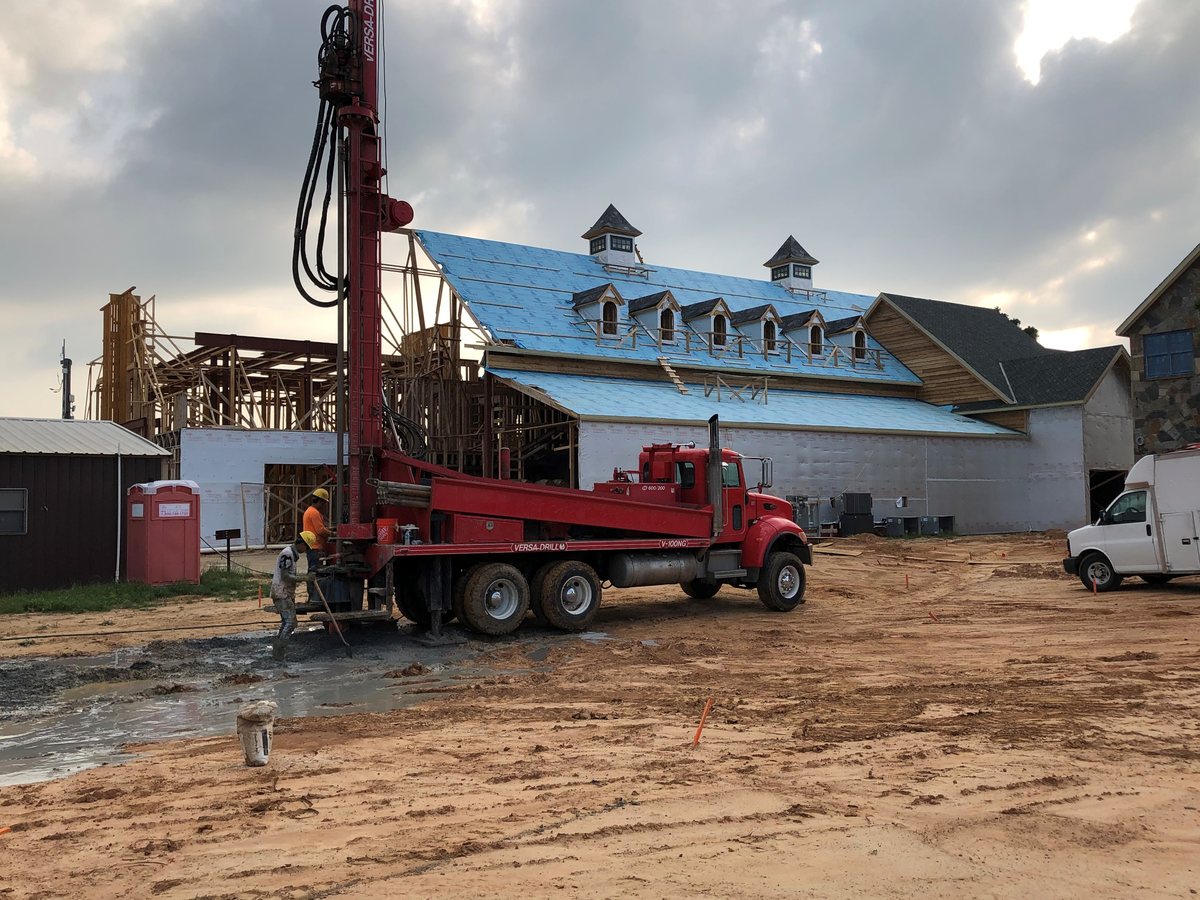
- Ground loop drilling — vertical bores drilled by our own in-house rigs. No subcontractor markup, ever.
- Loop piping — high-density polyethylene, fused underground and designed to last 50+ years. It's one-time, permanent infrastructure.
- Heat pump equipment — WaterFurnace or ClimateMaster units. We're a factory-authorized dealer for both.
- Ductwork connections — tied into your existing ducts, or new ductwork we design and install ourselves.
- Commissioning — full performance testing and a walkthrough before we call it done.
Spray foam insulation and full duct replacement are quoted separately — but because we do both in-house, adding them often lets us install a smaller, cheaper system.
Where the money goes on a $40,000 system
Drilling is the biggest slice — which is exactly why owning our rigs matters. It's the one cost most contractors can't control. We can.
Takeaway: 40–50% of your budget goes into the ground — one-time infrastructure that outlives two or three heat pumps.
What this means for your bill
The expensive part — the wells — never wears out. When the heat pump reaches the end of its 20–25 year life, replacing it costs about what a regular HVAC swap costs. You never pay for the drilling twice.
Higher on day one. Cheaper every day after.
Add up everything you'll spend over 20 years — equipment, electricity, maintenance, and the replacement a conventional system needs around year 15 — and the lines cross around year 10.
Typical mid-size DFW home. Conventional: $12K install, $4,000/yr to run, ~$14K replacement at year 15. Geothermal: $42K install, ~$1,000/yr to run. Twenty-year gap: $30,000–$60,000 in your favor.
0
up to 80% lower heating & cooling costs
0
year design life of the ground loop
0
potential 20-year savings vs conventional
The tax credit is gone. The math still works.
The 30% federal residential geothermal tax credit ended in 2025. Some contractors still dangle it. We won't — because you'd find out at tax time, not from us.
Here's why the numbers hold up anyway: the credit never changed what geothermal does. It still cuts heating and cooling costs 50–80%. The loop still lasts 50+ years. And electricity in Texas isn't getting cheaper.
Every rate hike makes the math better
Average DFW residential electric rates climbed from roughly 12¢/kWh in 2020 to the 15–16¢ range today — a rise of about a third. Each ERCOT price increase widens the gap between what your neighbors pay and what you would. A conventional system locks you into that ride. Geothermal mostly steps off it.
Commercial projects are a different story: federal incentives of roughly 30–50% remain available through 2035. See commercial geothermal.
"Without the tax credit, geothermal doesn't pencil out anymore."
The credit shortened payback by 2–4 years. It never created the savings. A system saving $2,000–$4,000 a year still saves that — and saves more every time rates rise.
"The quote is just the beginning — drilling always runs over."
Overruns happen when the drilling is subcontracted. We own the rigs and have drilled DFW clay for 25+ years — our quote is the price.
Six things that decide your price
Tonnage (system size)
Bigger homes need more tons of capacity — and roughly one bore per ton. A Manual J load calculation sets the exact size so you don't pay for capacity you'll never use.
Vertical vs horizontal loops
Horizontal trenches cost less but need a big open yard. Vertical bores (200–400 ft) fit almost any DFW lot and reach steadier temperatures. Most metro installs go vertical.
Existing ductwork
Sound, properly sized ducts get reused — free. Leaky or undersized ducts need work. We design and install replacements ourselves — no middleman.
Soil & drilling depth
Good news: DFW's clay conducts heat well — it's genuinely great geothermal ground. Rock layers in some areas add drilling time; depth runs 200–400 ft per bore.
Equipment tier
WaterFurnace and ClimateMaster each offer several lines. Higher-efficiency units cost more up front and earn it back over a 20–25 year equipment life.
Insulation quality
Spray foam (our crews, not subs) can shrink the system a home needs. Sometimes spending $8K on foam saves $10K of tonnage — we'll show you that math when it's true.
Straight answers about geothermal pricing
$25,000–$65,000 installed for a complete residential system. Smaller homes land at $25K–$35K, average homes at $35K–$50K, and large or multi-zone homes at $50K–$65K+. That covers drilling, loops, equipment, duct connections, and commissioning.
No — it ended in 2025, and we won't pretend otherwise. The savings that made geothermal worth it were never the credit: they're the 50–80% lower heating and cooling costs, every month, for decades. Commercial projects still qualify for federal incentives through 2035.
Tonnage, loop type, drilling depth, and ductwork are the honest variables. The hidden one is subcontracting: if a contractor hires out the drilling — nearly half the budget — they mark it up. We drill with our own rigs, so that slice stays in-house.
Per foot, yes. But horizontal loops need a large open yard, which most metro lots don't have. Vertical bores fit on nearly any lot and tap the ground's constant 67–69°F below 20–30 feet. On acreage in places like Lucas or Prosper, horizontal can be a smart saver.
Typically 7–15 years for DFW homes, faster if your current bills are high. After that, the savings are pure gain — and the loop keeps working for 50+ years. Try the savings calculator with your own numbers.
Next steps for your research
Savings calculator
Three sliders, honest math. See your annual savings, payback, and 20-year total.
Run the numbersAll the questions
Straight answers on cost, installation, performance, and maintenance in North Texas.
Browse the FAQGeothermal vs conventional
Efficiency, lifespan, comfort, and what Winter Storm Uri taught North Texas.
Compare systems