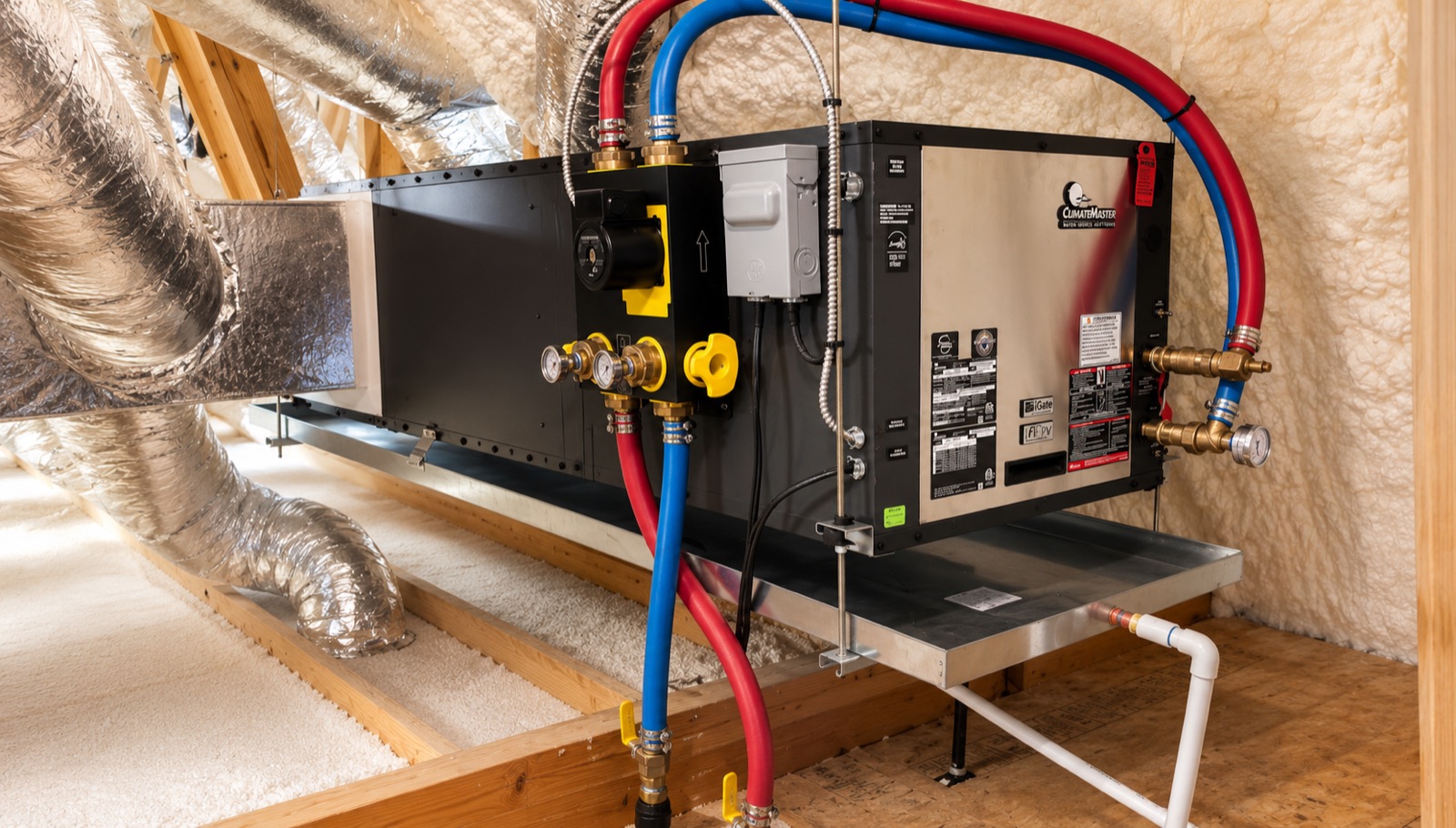
Plano attic retrofit with spray foam
Geothermal unit plus 6″ spray foam — the attic went from 140°F oven to conditioned space.
Completed install
Every system below sits on wells we drilled with our own rigs. No stock photos, no subcontractors — just real DFW yards, attics, and mechanical rooms.
Geothermal systems installed across the metroplex
Vertical bore drilled on a single commercial project
Years designing, drilling, and installing in North Texas
One takeaway: wells are one-time infrastructure. Every foot on this page is still working today — and designed to last 50+ years.
Residential jobs are a few wells in a backyard. Commercial jobs are entire well fields under a parking lot. Same physics, different scale.
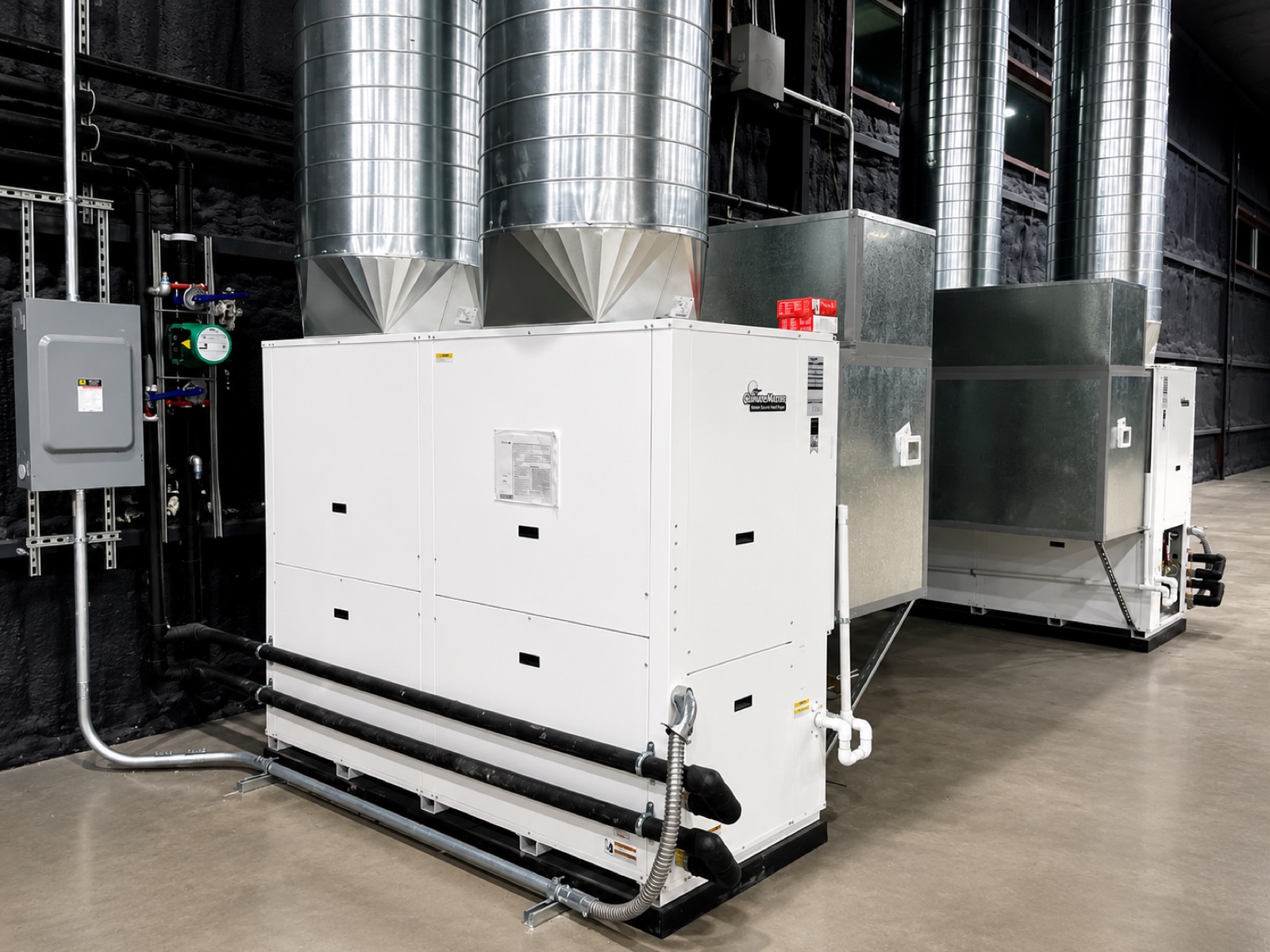
55-ton WaterFurnace system · 55 wells at 400 ft · 48,000 ft of loop
Read the case study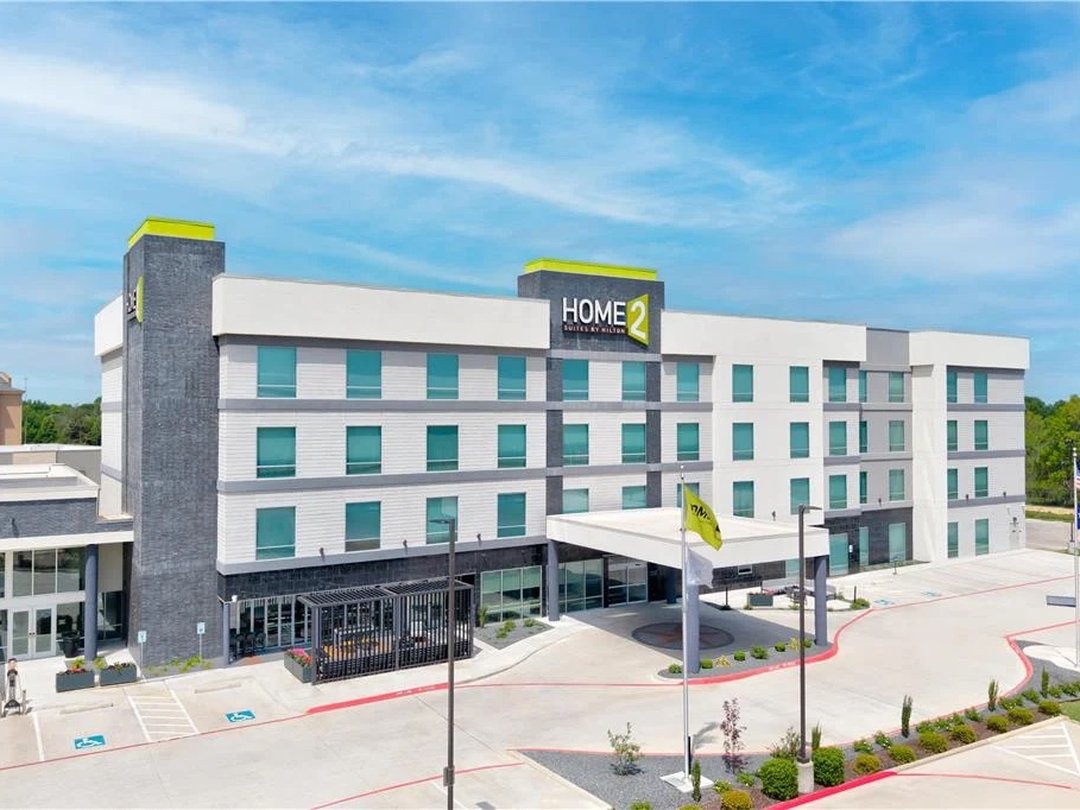
84 rooms · dozens of ClimateMaster heat pumps · one shared ground loop · crane-set rooftop units
Read the case study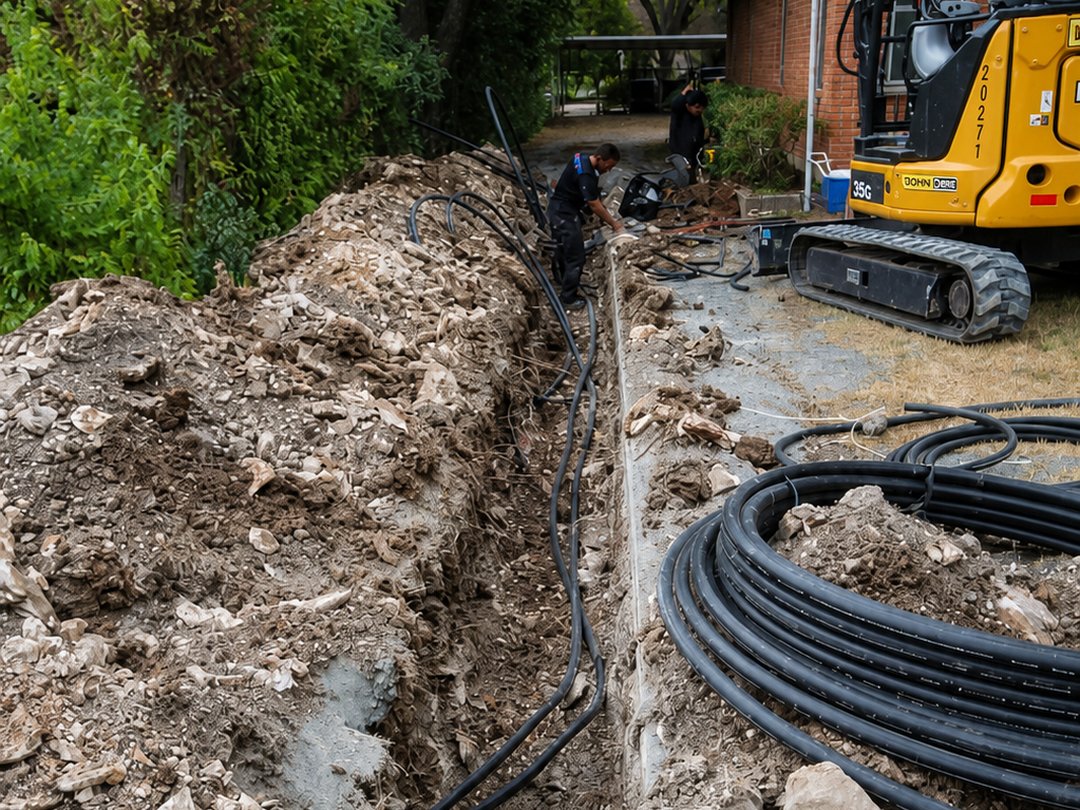
An architect's 1954 home gone zero-carbon · wells between the driveway runners · gas lines removed · ~50% lower bills
Read the case studyGeothermal unit plus 6″ spray foam — the attic went from 140°F oven to conditioned space.
Completed install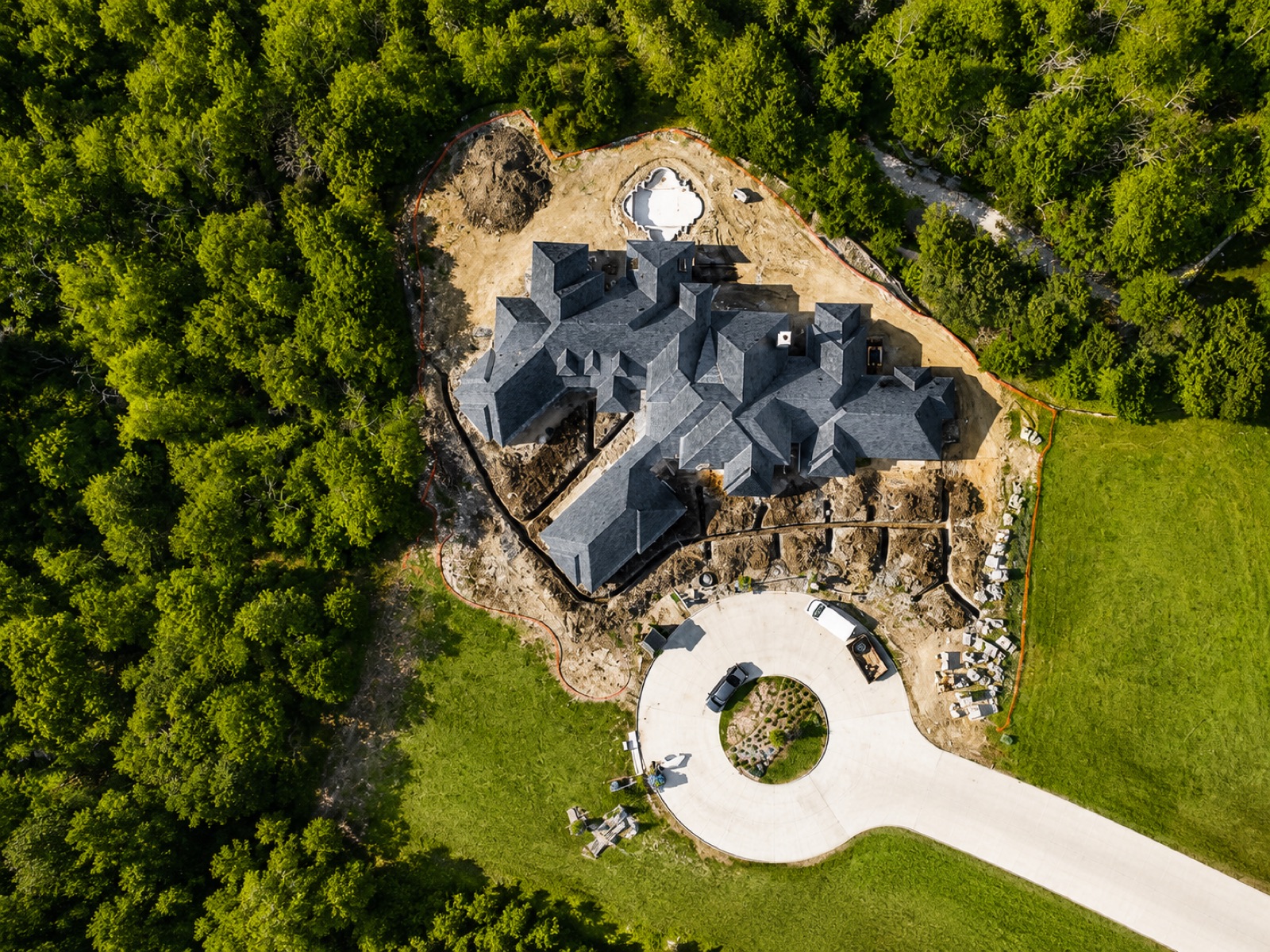
Enough open land meant shallow trenches instead of vertical wells — same 67–69°F earth, lower drilling cost.
Completed install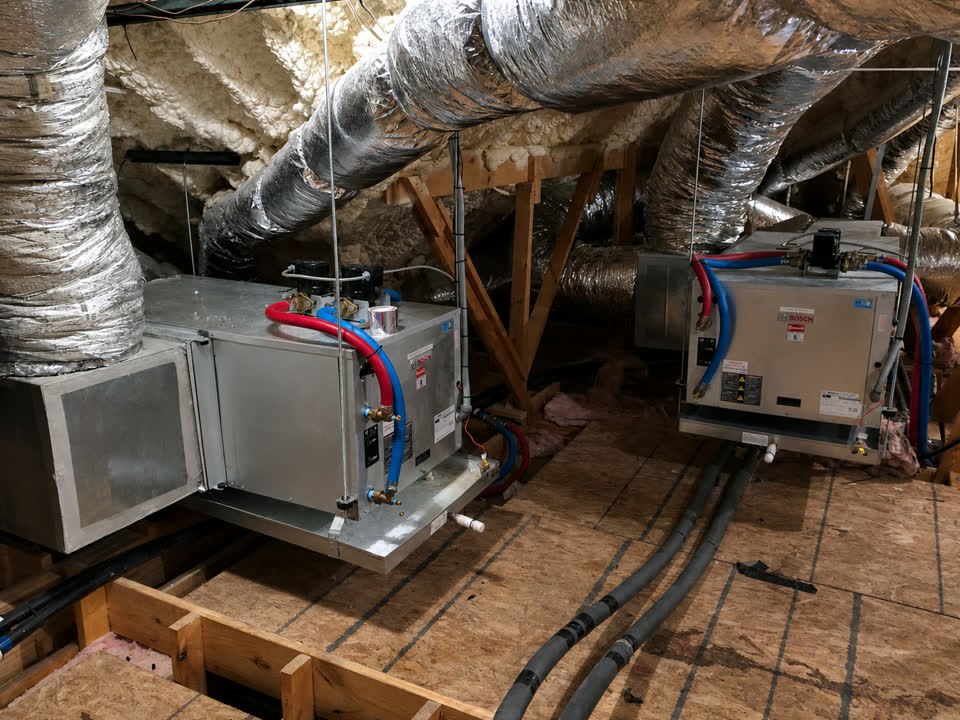
4-ton system with custom duct transitions designed and installed by our own crews.
Completed installGeothermal specs sound like jargon until you translate them. Here is the 60-second version.
Cooling power, not weight. One ton moves 12,000 BTU per hour — a typical DFW home needs 3–5 tons.
Vertical holes, usually 250–400 ft deep here. Below about 25 ft, Dallas earth holds a steady 67–69°F all year — like a cave.
Total pipe buried in the ground. Each well holds a U-shaped pipe, so 400 ft of well means 800+ ft of loop.
Efficiency. A COP of 4–5 means 400–500% efficient: one unit of electricity in, four to five units of heating or cooling out.
The equipment gets replaced every 20–25 years like any HVAC system. The wells never do — the loops are designed to last 50+ years, and the next owner of the house inherits them for free.
Our largest single well field, at Home Run Alley in Lucas, holds about nine miles of loop pipe — buried once, then invisible forever.
Takeaway: one commercial project buried 85 Reunion Towers' worth of pipe — and pays it back through electricity savings every month.
Schools, churches, hotels, and sports facilities — federal incentives still apply through 2035.
See commercial servicesOur own rigs and crews drill every well on this page. See how we get through Dallas clay.
How we drillThe full picture — loops, heat pumps, and why the earth under DFW stays 67–69°F.
Start learning