
Home Run Alley — a 55-ton system under a ball field
An indoor baseball training facility in Lucas, TX needed serious cooling without a serious electric bill. We put the answer 400 feet underground.
Tons of cooling capacity
Vertical wells drilled in-house
Depth of every single well
Loop pipe buried on site
55 wells × 400 ft = 22,000 ft of vertical bore — more than four miles of drilling on one property, done by our own rigs.
Challenge, solution, result
The challenge
A huge open metal building full of batting cages, running all day through 100°F+ North Texas summers. Conventional rooftop units big enough for the space would have produced a punishing monthly electric bill — forever.
The solution
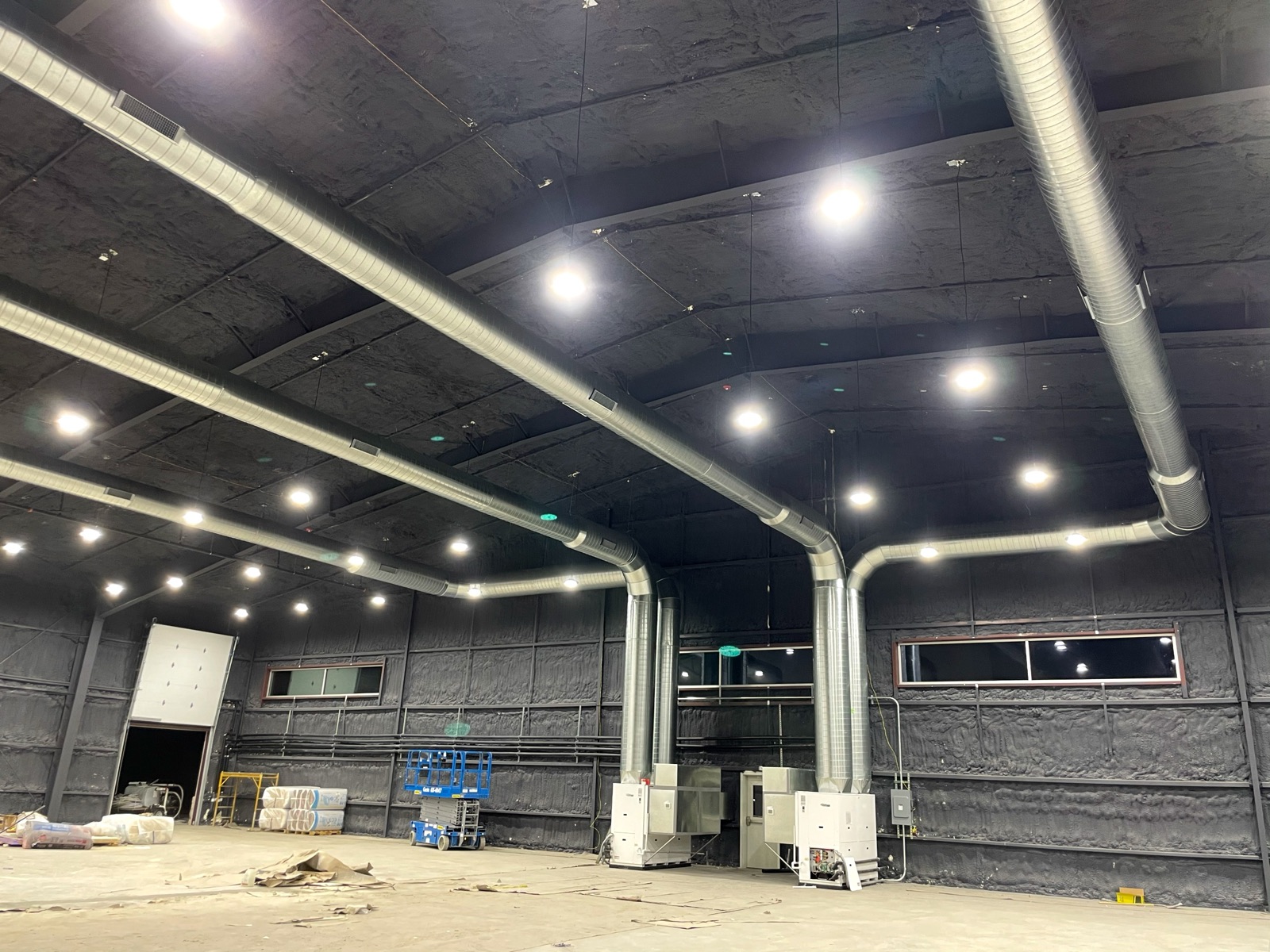
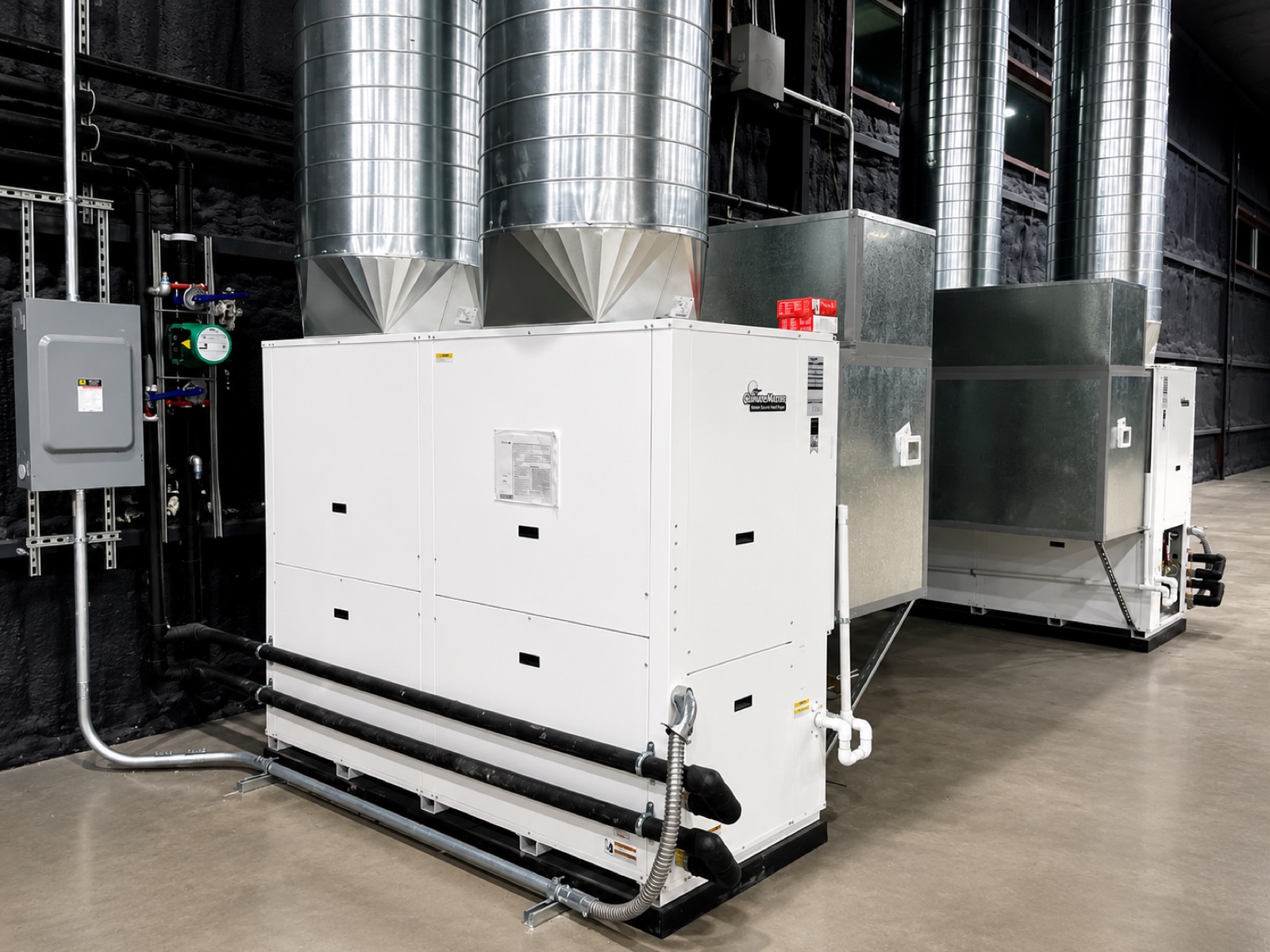
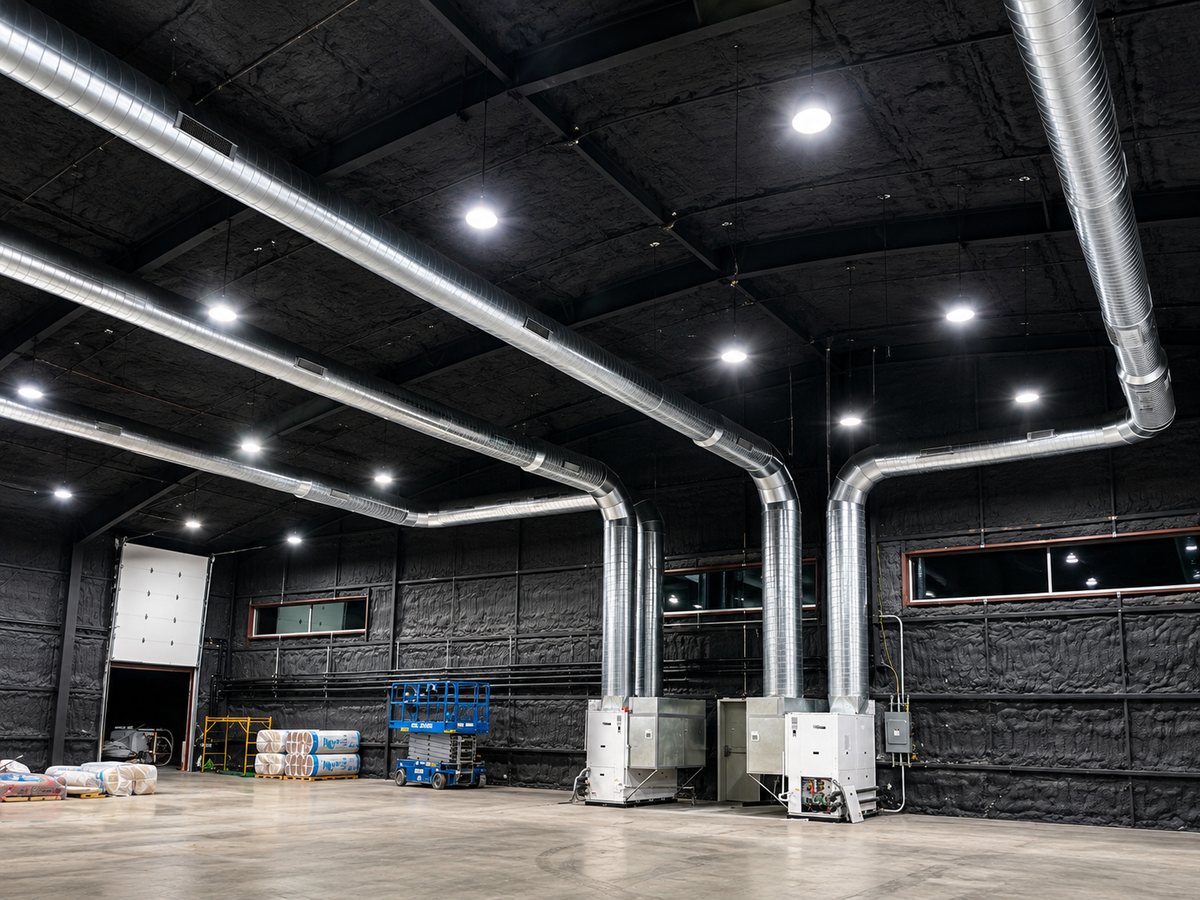
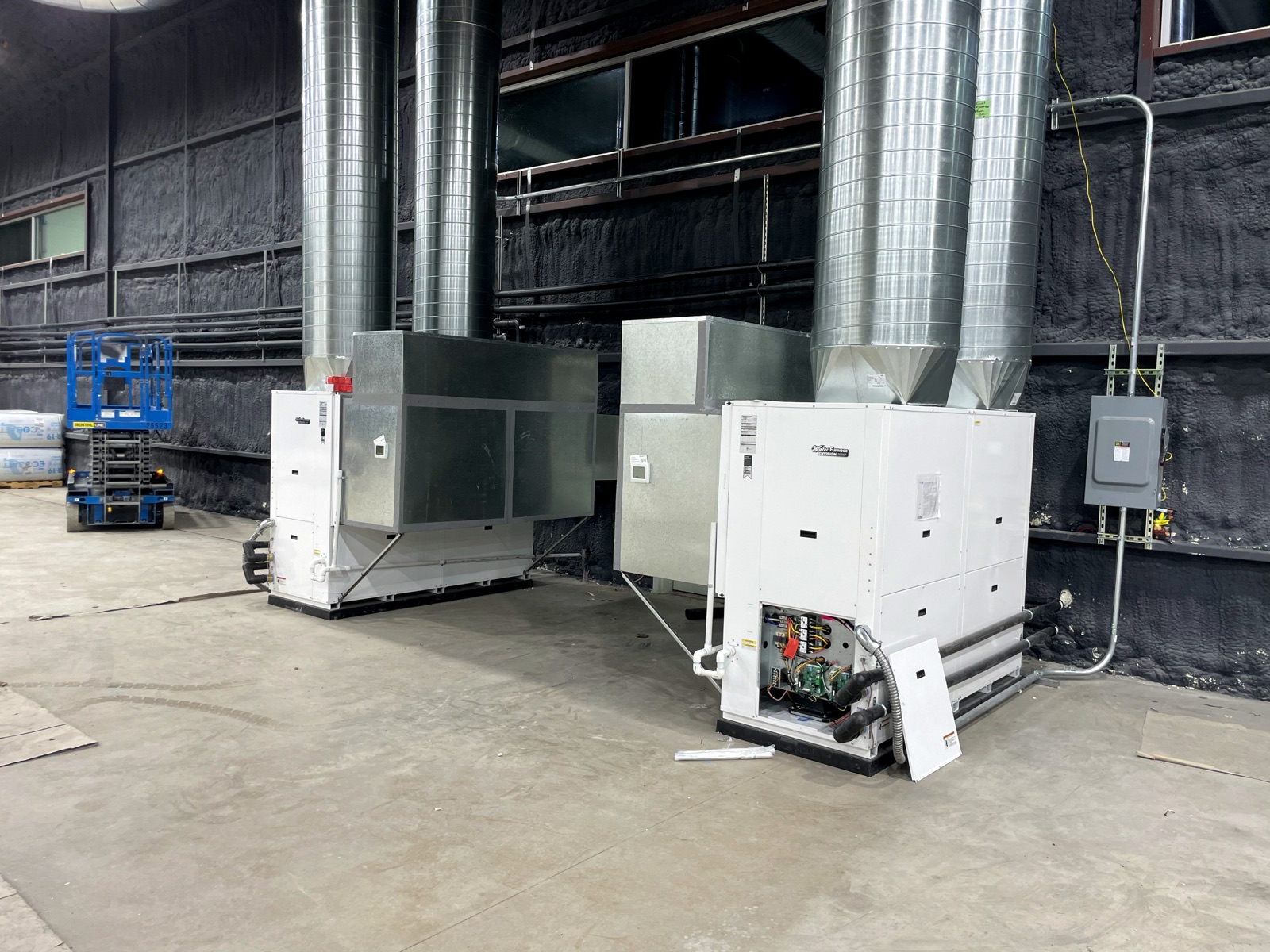
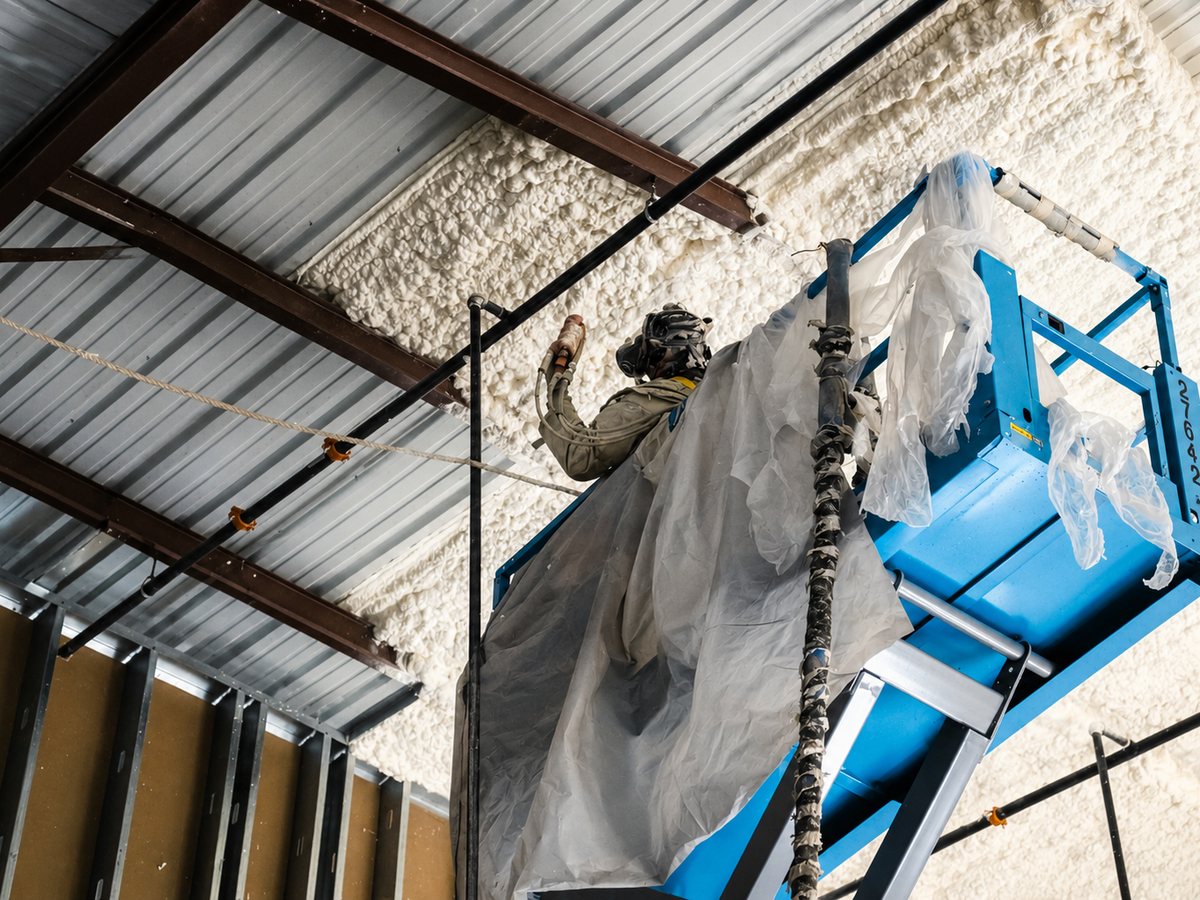
A 55-well field feeding three WaterFurnace units (two 25-ton and one 5-ton), moved through 30″ spiral duct tapering to 24″. We sealed the building with 6–12″ of spray foam plus intumescent fire block paint — every trade in-house.
The result
Steady, quiet comfort across the whole facility at a fraction of conventional operating cost — geothermal runs at a COP of 4–5, meaning 400–500% efficient. And the well field is permanent infrastructure, designed to last 50+ years.
Why this matters if you own a commercial building
The residential geothermal tax credit ended in 2025 — but commercial projects like this one still qualify for federal investment tax credits of roughly 30–50% through 2035. On a system this size, that is not a rounding error.
55 holes you will never see
Every dot on this diagram is a real well: 400 feet straight down through Lucas clay and limestone, holding a U-shaped loop of pipe.
Once drilled, grouted, and connected, the field disappears under the surface. Cars park on top of it. It quietly trades heat with 67–69°F earth, every hour of every day.
Think of each well as a cave in a straw: no matter what the Texas sky is doing, the bottom of that hole is the same temperature in January and August.
55 × 400 ft = 22,000 ft of bore under one parking lot
From the wells to the batting cages
Water loops through the well field, carries heat to (or from) the three heat pumps, and conditioned air travels through custom spiral duct we designed and installed.
Takeaway: one company built every link in this chain — wells, headers, heat pumps, and duct. When one crew owns the whole system, nothing gets lost between trades.
Project gallery
What commercial owners ask about this project
Yes. The residential credit ended in 2025, but commercial projects still qualify for the federal investment tax credit — roughly 30–50% with adders — through 2035. On a 55-ton system, that changes the payback math dramatically.
No. The wells are one-time infrastructure. The buried loops are designed to last 50+ years; only the heat pump equipment gets replaced on a normal 20–25 year cycle — and that swap never touches the ground loop.
Metal skins leak heat badly, and this building is one giant open room. 6–12″ of spray foam plus intumescent fire block paint sealed the envelope so 55 tons could actually hold temperature through a 105°F August afternoon.
We did — all of it. Our own rigs drilled the field on our schedule, our own crews installed the 30″ spiral duct we designed, and our own teams sprayed the foam. No subcontractors means one accountable company from bore to blower.
Where to go next
Commercial geothermal
Schools, churches, hotels, athletic facilities — and the incentives that still apply through 2035.
Explore commercialWell drilling
How our rigs punch 400-foot wells through Dallas clay, shale, and limestone.
See the drilling processAll projects
Back to the full gallery — residential retrofits and commercial well fields across DFW.
Browse projects