


Heat pump replacement

Geothermal heat pump replacement in Dallas–Fort Worth

Your wells are good for 50+ years. The heat pump isn't. Swap the aging unit, keep the loop you already paid for, and get modern efficiency in one to two days.

WaterFurnace authorized ClimateMaster authorized NATE-certified techs
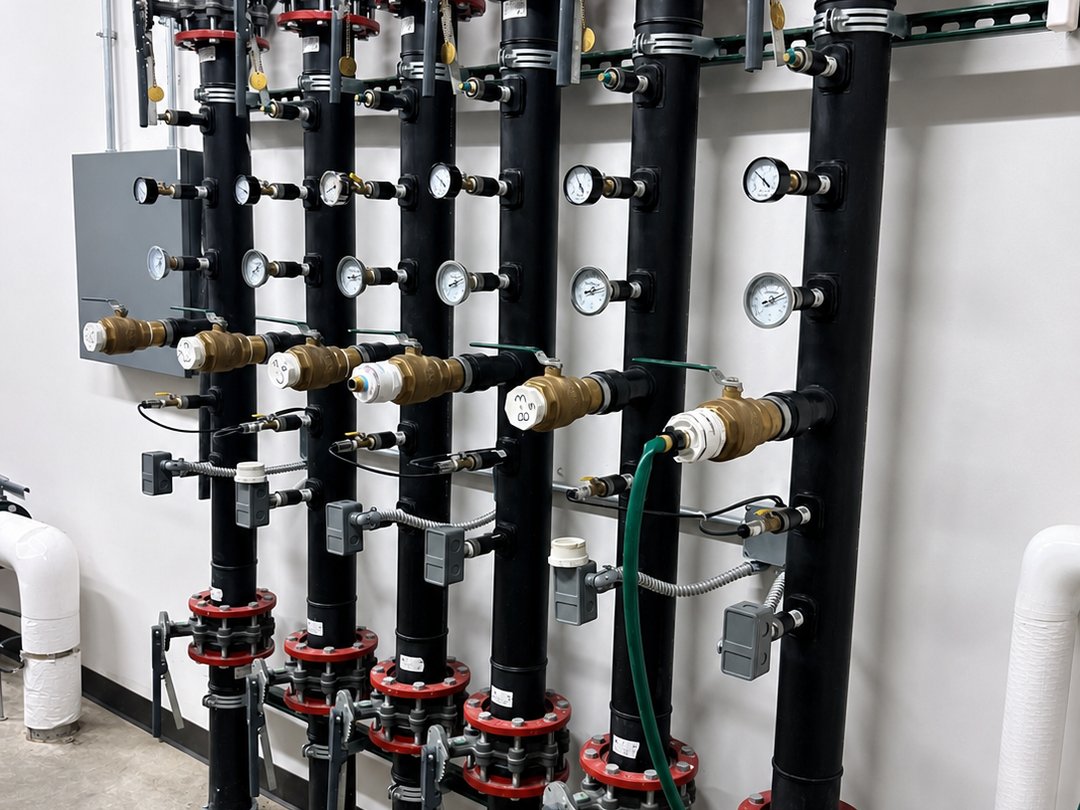
Commercial geothermal loop manifold wall with gauges, valves, and flanged risers plumbed by Excel Geothermal
1–2 daystypical replacement time
0% 100% 200% 300% 400% 500% Gas furnace ~95% 95% Best a gas furnace can do
Why upgrade

Why 450% efficiency isn't a typo

A gas furnace makes heat by burning fuel, and even the best ones lose a little up the flue — about 95% efficient, tops.

A geothermal heat pump doesn't make heat. It moves heat that already exists in the 67°F earth under your yard. Moving heat takes far less energy than making it — like sliding a box across the floor instead of building a new box.

That's what COP means: a COP of 4.5 says the system delivers 4.5 units of heat for every 1 unit of electricity it uses — 450% efficient. Modern variable-speed units run at a COP of 4–5 all winter.

What this means for your bill

A 15–20 year old unit replaced with a modern variable-speed model typically cuts heating and cooling electricity 20–40%. With ERCOT rates trending up, every point of efficiency is worth more each year.

The energy math

1 kWh in, 4.5 kWh of heat out

You only pay for the electricity. The earth donates the rest.

1 kWh electricity (the part you pay for) 3.5 kWh heat from the earth (free, from your 67°F ground loop) Heat pump COP 4.5 4.5 kWh of heat into your home

Takeaway: every $1 of electricity moves about $4.50 worth of heat. A gas furnace can never beat 1-for-1.

Repair or replace?

Six signs your heat pump is done

Geothermal heat pumps last 15–25 years. Here's how they tell you they're finished.

It's past 15 years old

Repair costs climb and parts for old models get scarce. Past 15 years, put repair money toward a new unit instead.

Bills creeping up

Same thermostat setting, higher electric bill? Worn compressors quietly lose efficiency year after year.

Two-plus repairs a year

One repair is normal wear. Repeated compressor, valve, or board failures mean the unit is at end of life.

It runs on R-22

R-22 refrigerant is phased out, so recharging a leaky unit costs a fortune. Replacement nearly always wins.

Hot and cold rooms

If the system can't hold its setpoint on a 103°F Dallas afternoon, it's no longer delivering rated capacity.

It's getting loud

New rattles or compressor groans mean worn bearings and loose parts — the mechanical countdown has started.

Myth: "If the heat pump dies, the whole geothermal system is dead."

Fact: the ground loop — 30 to 50% of what the original system cost — is separate and designed to last 50+ years. Replacing only the heat pump costs far less than the original install, and the payback is faster too.

Our process

How a replacement works

Loop checkup

We pressure-test and flow-test your existing wells first. If the loop is healthy — it almost always is — the rest is simple.

Fresh load calculation

Added insulation or new windows since the original install? You may need a smaller, cheaper unit than before. We run the numbers instead of guessing.

Pick the right unit

We match a WaterFurnace or ClimateMaster model to your loop capacity, ducts, and budget — whichever brand fits, not whichever we feel like selling.

Out with the old, in with the new

Old unit out, new unit connected to your existing loop and ductwork. Usually one to two days, start to finish.

Commission and walk-through

We verify flow rates, refrigerant charge, and air temperatures, program your new thermostat, and show you how everything works.

Excel Geothermal receiving the ClimateMaster Outstanding Dealer award
Award-winningClimateMaster Outstanding Dealer
Equipment

WaterFurnace or ClimateMaster?

We're factory-authorized for both, so the recommendation fits your house — not a sales quota.

WaterFurnace — factory-authorized dealer

WaterFurnace

Most efficient on the market

7 Series

The most efficient unit made — COP above 5 at rated conditions. The variable-speed compressor glides to match your home's exact load, with built-in hot-water assist and remote monitoring.

Best for: maximum savings

5 Series

Two-stage compressor with excellent efficiency at a friendlier price. The most common upgrade from an old single-stage unit.

Best for: value upgrades

3 Series

Reliable single-stage workhorse. A solid budget-minded swap when the existing loop field is well sized.

Best for: budget replacements

ClimateMaster — factory-authorized dealer

ClimateMaster

Outstanding Dealer, six years running

Tranquility 30 (TE)

ClimateMaster's variable-speed flagship — smooth, quiet, high COP, with optional hot-water assist. Head-to-head rival of the 7 Series.

Best for: maximum savings

Tranquility 27 (TT)

Two-stage performer that fits a wide range of loops and duct systems — a favorite for replacement projects.

Best for: flexible retrofits

Tranquility 22 (TS)

Compact and affordable — well suited to smaller homes or tight equipment closets.

Best for: smaller spaces

Both brands are built in the United States and carry strong warranties. Both work with any standard ground loop — including one we didn't drill.

The biggest upgrade

Single-stage vs variable-speed: cruise control for comfort

An old single-stage unit is like driving by stomping the gas, coasting, and stomping again. It's either 100% on or completely off — even when your home needs just 30% of that power.

A variable-speed unit is cruise control. It settles into a low, quiet hum that exactly matches the load, running longer but using far less electricity.

  • Steadier temperatures — no more hot-cold seesaw between cycles
  • Better humidity removal, which matters in sticky DFW summers
  • Nearly silent at low speed
  • Less start-stop stress, so the compressor lasts longer

Dallas summer math

In a DFW July with day after day above 100°F, your system runs more hours than almost anywhere in the country. That's exactly when a right-sized variable-speed unit — fed by a 67°F loop instead of 100°F outdoor air — earns its keep.

While the panel's open

Replacement day is the cheap moment to fix leaky ducts — we design and install replacements ourselves — or add spray foam insulation, sometimes letting you buy a smaller unit.

Loop trouble? We drill.

If testing shows your loop field is undersized, we're the rare company that can fix it — our own rigs can add a supplemental well without a subcontractor.

Common questions

Heat pump replacement questions, answered

Yes. WaterFurnace and ClimateMaster both work with standard ground loops, so you can switch brands at replacement. We confirm loop and duct compatibility during the evaluation.

One to two days for most homes. Old unit out, new unit connected to the existing loop and ducts, then commissioned and tested. Duct modifications can add a day.

Almost always yes. HDPE pipe doesn't corrode underground and is designed to last 50+ years. We pressure-test and flow-test it as part of every evaluation, so you'll know for sure.

Variable-speed units need a communicating thermostat to manage the compressor and blower. We include a compatible thermostat with every replacement and program it before we leave.

R-22 has been phased out, so recharging a leaking R-22 unit is painfully expensive. In nearly every case, replacement is the smarter spend than another R-22 repair.

Not always. If your ducts are sealed and sized for the new unit's airflow, they stay. We check on every project and only recommend changes that will actually show up in comfort or bills.

Is it time to retire your old heat pump?

Free evaluation: we'll test your loop, check your unit, and tell you honestly whether repair or replacement wins.

Get a Free Evaluation Prefer to talk? (214) 305-9017