
Geothermal vs conventional AC: the honest DFW comparison
No hype — just how the two systems actually stack up for Dallas–Fort Worth homes, from 25+ years and 1,000+ installations. Including when conventional is still the right call.
One fights the weather. One ignores it.
A conventional system makes heat by burning gas, and cools by shoving your home's heat into the outdoor air. Its workplace is the Texas weather itself — 105°F in August, freezing in February. It always works against the conditions.
A geothermal system trades heat with the ground instead, where it's 67–69°F under DFW every single day. Its workplace never changes.
That one difference — weather vs earth — explains almost every line in the table below.
The ground: 67–69°F, every day of the year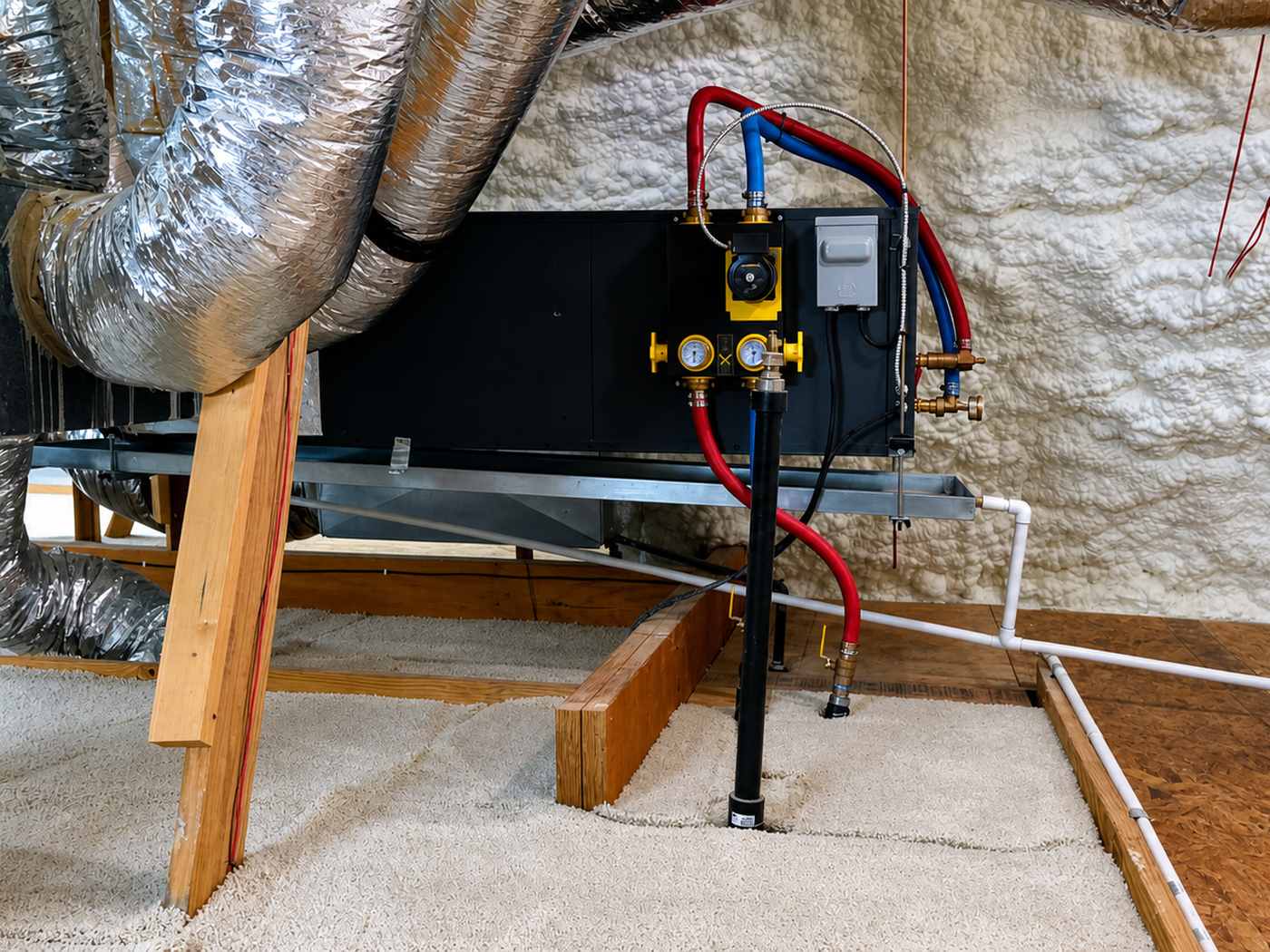
Watch the two systems race
Same starting line: 1 unit of energy in. How much comfort comes out?
A 14–16 SEER air conditioner and 95–98% furnace. Energy in ≈ comfort out — that's its ceiling, forever.
COP of 4–5 (EER 20–30+): every unit of electricity moves 4–5 units of heating or cooling. The extra units come free from the earth.
Bar lengths are proportional to delivered comfort per unit of energy purchased.
The full comparison
Every number below comes from real DFW installs and published equipment specs — not brochure best-cases.
| Feature | Conventional HVAC | Geothermal |
|---|---|---|
| Efficiency | 95–98% furnace / 14–16 SEER AC | COP 4–5 — 400–500% efficient |
| Upfront cost | $8,000–$15,000 | $25,000–$65,000 |
| Monthly heating & cooling bill | $250–$500 | $50–$150 |
| Lifespan | 12–15 years | 20–25 years equipment · 50+ years loop |
| Noise | Outdoor condenser hum by the patio | About as loud as a refrigerator |
| Outdoor unit | Yes — exposed to hail, sun, and ice | None — everything indoors or underground |
| Weather vulnerability | Loses capacity on 100°F+ days; heat pumps struggle below 25°F | Ground stays 67°F — heat waves and ice storms can't reach it |
| Refrigerant lines | Long outdoor line sets — baked by sun, nicked by trimmers, prone to leaks | Sealed inside the cabinet — nothing outside to leak |
| Annual maintenance cost | $300–$500 | $150–$250 |
| 20-year total cost of ownership | $84,000–$143,000 (incl. one replacement) | $50,000–$80,000 |
Ranges reflect typical DFW homes; your numbers depend on home size, insulation, and usage. Run your own numbers.
Winter Storm Uri settled the argument
February 2021. Texas dropped below 0°F. Gas supply failed, the grid buckled, and millions of homes went cold for days.
Outdoor heat pumps iced over and quit. Gas furnaces sat dead without fuel. The systems that lived outside — in the weather — failed with the weather.
Twenty feet down, nothing happened. The ground stayed 67–69°F through the whole storm, and every Excel geothermal system kept quietly pulling warmth from it. Our customers' loops didn't know there was a crisis above ground.
That's not a brochure claim. It's the worst winter event in modern Texas history, and geothermal passed it.
Uri by the numbers
0°F
surface temperature at the worst of the storm
67–69°F
ground temperature at loop depth — unchanged
0%
of Excel geothermal customers who stayed warm
Where does your heat go on a 105°F afternoon?
Dallas now logs weeks of 100°F+ days most summers. Cooling is just moving heat out of your house — and where you send it changes everything.
Conventional — fights the weather
Pushing heat into hotter air = uphill work
Geothermal — just uses the ground
Sending heat into cooler ground = downhill all day
Pushing heat into 105°F air is like pumping water uphill — and the hill grows all afternoon. Pushing it into 67°F ground is downhill, at 3 pm in August or any other time.
What this means for your bill
Conventional AC is least efficient at the exact hours electricity is most strained and most expensive. Geothermal's efficiency doesn't sag in the heat — which is why, with ERCOT rates trending up, DFW owners commonly see 50–80% lower heating and cooling costs. See what a system costs.
Differences you'll notice in week one
Quieter than a fridge
No condenser humming by the patio. Most owners forget the system is running.
Even temperatures
Variable-speed compressors ramp gently instead of blasting on and off — no more hot upstairs, cold downstairs.
Drier summer air
Longer, gentler run times wring more humidity out — a real gift in muggy DFW springs.
Nothing outside to break
No hail-dented condenser, no HOA eyesore, no refrigerant lines for the weather to chew on.
When conventional still makes sense
We install geothermal for a living, and we'll still tell you it's not for everyone. Conventional HVAC can be the smarter buy if:
- Your home is small (under ~1,500 sq ft) and your bills are already low
- You plan to sell within 3–5 years
- The upfront cost doesn't fit your budget right now
For most DFW homes of 2,500+ sq ft whose owners plan to stay 7+ years, geothermal wins by every long-term measure. And remember: the wells are one-time infrastructure. Drill them once and every future heat pump — 25 and 50 years from now — plugs into the same loop.
Myth vs fact
Myth: "Heat pumps don't work in Texas cold snaps."
Fact: true for air-source units below 25°F — they fall back on heat strips. Geothermal draws from 67°F ground, so its capacity never drops.
Myth: "Geothermal is unproven technology."
Fact: it's been heating and cooling homes since the 1940s. Excel alone has 1,000+ installations across DFW.
Myth: "The upfront price means it never pays off."
Fact: over 20 years, conventional typically costs $84,000–$143,000 with a mid-life replacement; geothermal runs $50,000–$80,000 total.
Comparison questions we hear most
More detail lives in the full FAQ — 20+ answers for North Texas homeowners.
Because it moves heat instead of making it. A furnace can never give more heat than its fuel contains. A geothermal heat pump uses a little electricity to move a lot of existing heat to or from the 67–69°F ground — a COP of 4–5, meaning 4–5 units of comfort per unit of electricity.
It keeps running. Geothermal doesn't depend on outdoor air or gas supply — the ground stayed 67–69°F through the whole February 2021 storm, and Excel's geothermal customers stayed warm while conventional systems across Texas failed.
No. Because the ground never gets cold the way the air does, a properly sized geothermal system keeps full heating capacity through North Texas cold snaps. Air-source heat pumps lose capacity below about 25°F and lean on costly heat strips — geothermal doesn't.
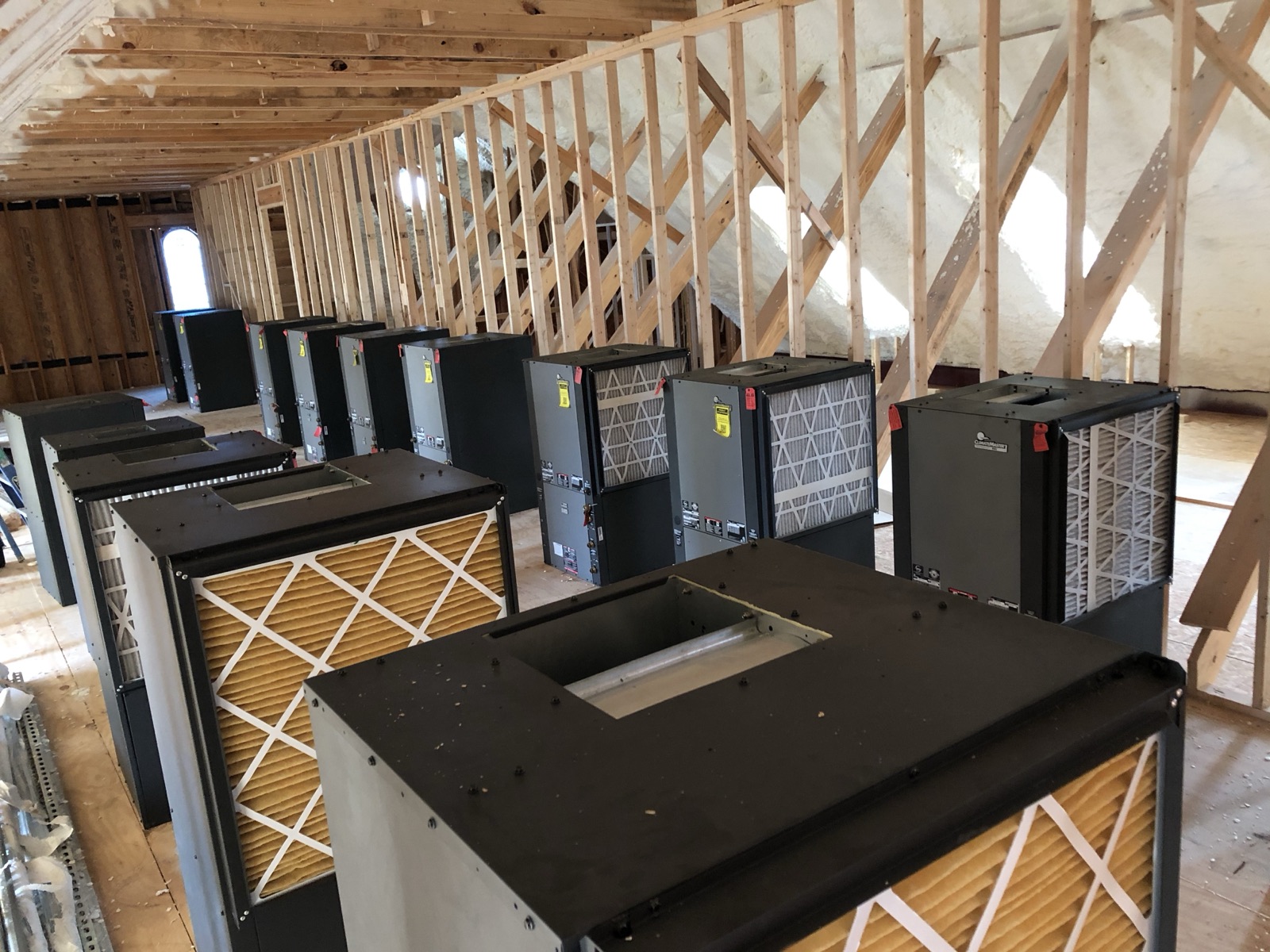
Really. Everything lives indoors or underground. No condenser humming by the patio, nothing for hail or ice to destroy, and no exposed refrigerant line set — it's sealed inside the cabinet.
Honestly, maybe not. Geothermal wins over 7+ years of ownership. If you'll sell within 3–5 years, conventional may pencil out better — though the buried loop is a permanent upgrade that stays with the house and can help resale.
Keep comparing
What geothermal costs in DFW
Real price ranges, what drives them, and the 20-year total-cost picture.
Read the cost guideSavings calculator
Plug in your bill and square footage — see your estimated savings and payback period.
Run your numbersReplacing an old system?
How we swap a dying conventional setup for a WaterFurnace or ClimateMaster geothermal unit.
Heat pump replacement